


Whenever we think of love, the first thought that comes to mind is Romeo and Juliet, Heer-Ranjha, Laila Majnu, or even Paris and Helen of Troy. But why is it that all the love stories we think of are epics from the past, all are love stories told by others? Stories that are so mythical that we've even debated their existence.
But my favourite love stories are the ones where they don’t always die a violent death. Where the universe isn’t actively pulling them apart, where they are allowed to form fond memories without the fear of imminent death. A love where they know each other like the back of their own hands. A love that ends when they’ve fulfilled their role in their lover’s life.
There’s a different beauty in a love that brings peace. A love that’s complete and kind, not necessarily placid, but not violent in the sense that it is all-consuming and soul-consuming.
My favourite love stories weren’t just love stories; they were two separate lives that entwined together to form a beautiful thread of gold that went on to hold many memories.
Like two colours that complemented each other. Each framed the other and made it pop.
As an artist myself, I can vouch for the fact that art is different when the artist has vs. doesn’t have a muse. It feels more complex, layered; it immortalizes an individual’s entire existence and our feelings for them.
But this isn’t to discredit the beautiful complexities of art not inspired by muses. But it is just that a love so pure and energetic that it creates more than it consumes us is rare. Growing rarer in a world sinking more and more into the depths of an automated sinkhole.
Amedeo Modigliani and his partner Jeańne Huburtin are a favourite artist and muse pair. Sure, they don’t fully fit the description. Of love that I described as my fav, but in the short time they were together, they knew each other. She inspired many, but loved ones. But the love was so deep it made them both Icarus and the sun to each other.
She loved him dearly, and he loved her. Modigliani once famously said, “I’ll paint your eyes once I know your soul.” And it was true for the most part. All his paintings of her portrayed her eyes. Her distinct blue eyes which were one of her distinguishable figures.
Jeanne was often referred to as the woman who balanced amedeo’s lifestyle. Her quiet, shy, delicate presence balanced Amedeo’s alcoholic, substance-abuse, and playboy lifestyle. But this often overlooks her own skills as an artist. She was a brilliant painter, violinist, and a skilled seamstress who sewed her own clothes, which were featured in Modigliani’s portrait of her.
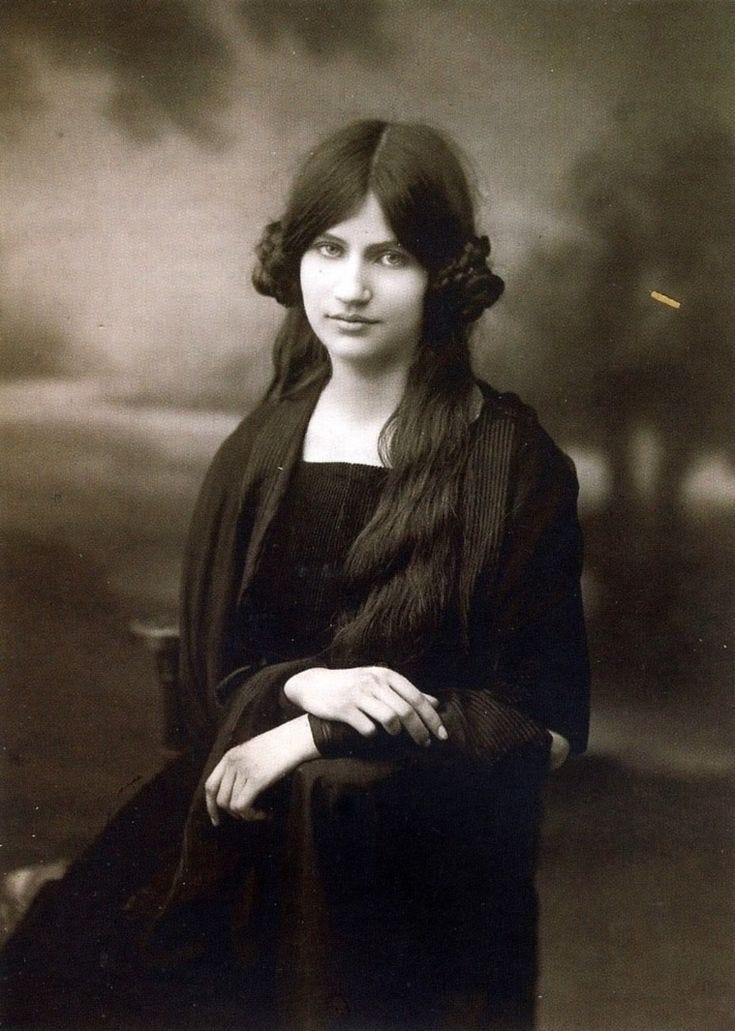
Jeańne Huburtin.
There has always been a beautiful contrast in Amedeo’s portraits of Jeanne and Jeanne’s portraits of herself. Amedeo’s paintings showed her lost in thought and pensive, looking every bit the quiet, youthful calm that brought stillness to his life. Her portraits of herself showed her in full colour, unbound by rules of “classical” artwork. A dreamer, an individual with her own aspirations and not just an artist’s muse.
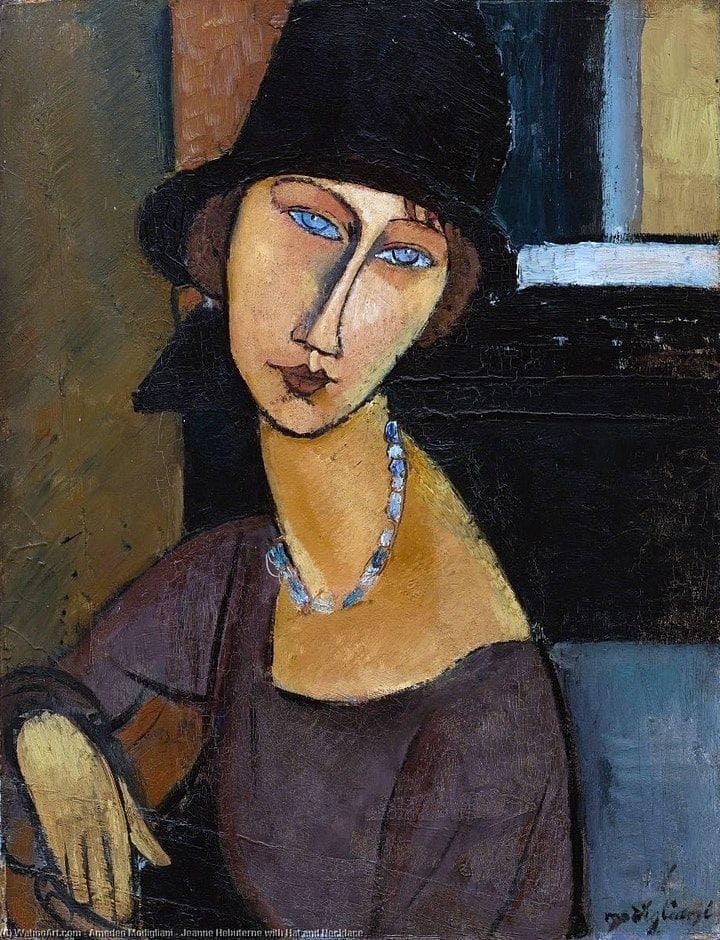
Modigliani’s portrait of Jeanne.
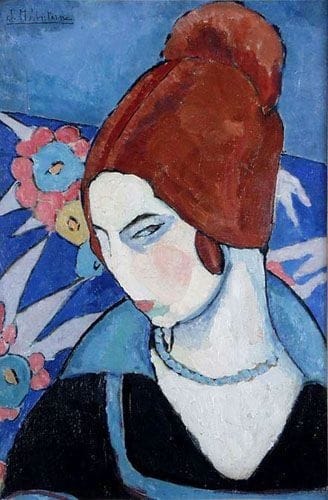
Jeanne’s portrait of herself.
Sadly, their life together met an unfortunate end when Amedeo died after his prolonged ill health caused by his past substance abuse. Overcome with grief over his death, she jumped to her death while 8 months pregnant with her and Amedeo’s second child. Leaving behind their 2-year-old daughter Jeanne, who was named after her.
While their story ended in death, they loved each other till the very last moment, and their art carried those emotions both then and now.
But there’s another love story that too had an ending in parting but not in death. I honestly do not know if that is better or worse because it became a cautionary tale for me and probably many other artists.
The lore behind photographer Masahisa Fukase’s collection ‘from window’ holds both the fever dream and nightmare of every artist. Fukase had been staying separately in a flat in Shinjuku and had already worked with many other models.
However, in the summer of 1974, he went to his hometown to take pictures of his parents’ funerary portraits. It was here that he developed an obsessive ritual of photographing his wife, Yokō Wanibe, through the window as she was leaving for work each morning. What started at first as a cute morning ritual became an obsessive performance. And the thing that pushed their failing marriage over the edge. Yokō signed the divorce papers in 1976, after having gotten sick of being perceived only through a lens by her husband.

Fukase’s photos of Yokō.
But Yokō wasn’t the only one who Fukase photographed constantly. He captured any moment he could with his lens, be it a cat or people he was hanging out with. He himself knew his self-sabotaging habit of photographing everything to the extent that it was as if he went out just so he could photograph life around him.
The transition was slow. Sudden, even, but only if you were inside Fukase’s bubble. The outside eyes viewing the portraits could see, morning after morning, the love in Yokō’s eyes turning into disdain and annoyance.
This brings me to my question… can the bond between the artist and their muse be more than what it already is? Can they share a bond outside of the art between them?
That is a question a lot of artists should ask themselves.
Speaking from personal experience, I too once had a muse, an individual who made me think, rethink, and then overthink. They made my brain go haywire. Words started flowing even without trying, and it was often that I wasn’t able to jot them all down.
I haven’t had the notion that every pretty thought should be written down in a long time. This continued even when I was head over heels over my muse. Maybe that is what prevented us from burning each other. Or maybe it was me getting rejected when I finally confessed that kept us from becoming them, the cautionary tale. Sometimes I wonder if my love was real because it is not anything close to what I’ve ever read. And other times it did feel like it was something out of time-stained pages, with the way I kept writing about them.
Modigliani was a painter and a sculptor; Jeanne was his muse. Fukase was a photographer, and Yokō was his muse. I was the poet, and a certain someone was my muse.
What this misses out tho is the certain complexities of “muses” an artist can never truly understand. Jeanne was an exceptional painter, and a skilled seamstress in her own right. Yokō was an employee of an art gallery and, in my opinion, a fashionista in her own right. A certain someone was a gifted intellectual, blessed with beautiful thoughts on both sides of the brain… knowing their way around math and words.
All these qualities got swallowed by the words, brushstrokes, and camera clicks of the artists…
The only way I feel an artist can have a bond with their muse outside of art is by knowing when to stop writing, when to put the brush down, and when to put the cover back on the lens. Because if every aspect of our love is being immortalised, what’s left to experience?
I’m sure many pairs have successfully done what I just suggested. But I know the names of none. One name I do know of, where the artist and muse had a bond through and outside of art, is Frida Kahlo.
I’m sure I don’t need to tell you who she is.
She was both the art and the artist. Frida Kahlo once said, “I paint myself because I am often alone and I am the subject I know best”.
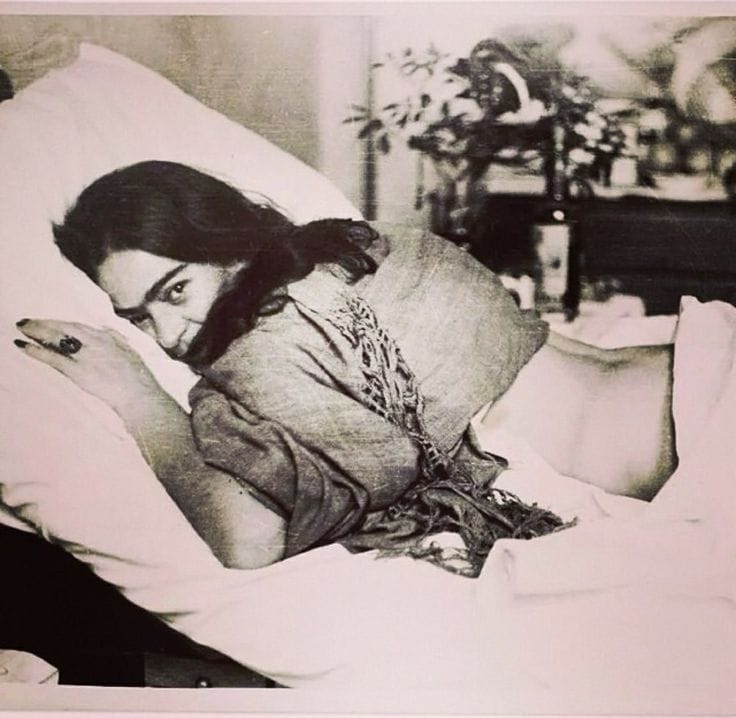
Frida Kahlo.
Out of her 143 paintings, 55 were self-portraits. All were heavily symbolized portrayals of the wounds gifted by life, be they psychological or physical. To say she knew herself, in my opinion, is an understatement. She is quite literally one of the first few names that pop into my mind when I think of self-obsession and someone who is their own muse. Jeanne, too, was her own muse.
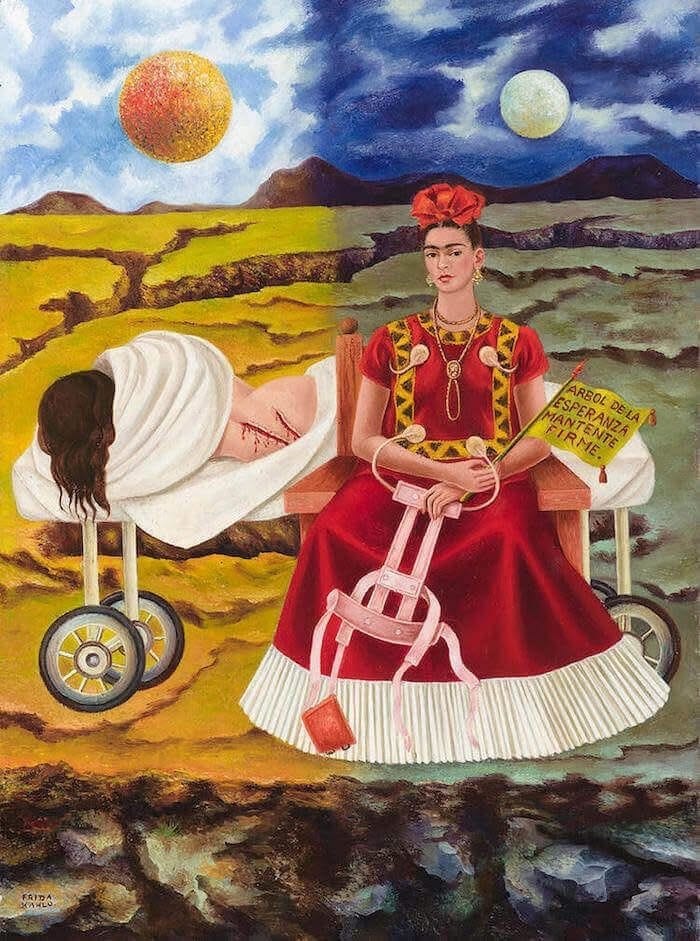
“Tree of Hope Remains Strong” - Frida Kahlo.
So could it be that the only way an artist can fully and authentically portray their muse is if they share a heart, mind, body, and soul? To be loved is to be known, but even getting to know yourself is a constant work in progress… the poems I write today about my crappy relationship with my mother may overwhelm me next week if I’ve had a good day with her.
So my answer is an optimistic yes… inexperienced even, cus I’ve never really been in a relationship of such a manner with anyone else… So I have all the reasons to hope it is true that the love between the artist and the muse can be greater than the art.

This is wonderful, and I'm so proud of you! And i agree with short lived love. Sometimes you fall in love with people just for a while, but that time is so precious that it lingers and inspires you about loving that way again forever